

Redefining Oral Care: A Contextual Exploration of the Ideal Toothbrush Experience
Our graduate team at SCAD explored the ideal toothbrush experience using Lextant’s contextual research methodology. We conducted primary and secondary research, including a screener, observations, in-depth interviews, and cultural probes, gathering over 2,000 data points. Through affinitization, we identified key themes and developed a framework to map user needs and emotions.
While the focus was deep exploratory research, we also proposed a design solution, compiling our findings into a design magazine. This project earned us a Lextant Certificate for excellence in contextual research.

Client:
Lextant
Duration:
10 Weeks
Role:
Design Researcher
Team:
5 designers
About Project
The Goal:
To explore the toothbrush experience from purchase to disposal, identifying key moments, attitudes, and aspirations to redefine user expectations.
Skill Sets Used:
Data Collection | Data Synthesis | Insight Generation | Conceptualization | Storytelling | Data Visualization
Phase 1: Research
Conducted observations (Kroger, Target, homes), screener, in-depth interviews, and cultural probes to gather over 2,000 data points on user interactions, challenges, and purchasing behaviors.
Phase 2: Affinitization & Analysis
Synthesized findings to identify key themes, attitudes, and aspirations, shaping a deeper understanding of user needs.
Phase 3: Framework & Solution Development
Created a user experience framework, explored possible solutions, and compiled insights into a design magazine, visually presenting our research.


.jpeg)
Observation
Studied user behaviors and interactions with toothbrushes in real-life contexts.
Screener & Interviews
Selected participants and conducted in-depth interviews to gather qualitative insights.
Cultural Probe
Engaged users in self-documentation activities to uncover subconscious behaviors and emotions.
Affinitization & Analysis
Synthesized over 2,000 data points, identifying key themes, attitudes, and aspirations.
Key Observations
Phase 1
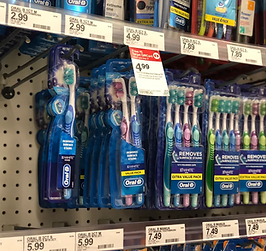
We conducted observations at Kroger, Target, and in people’s homes to explore how users interact with their toothbrushes, make purchasing decisions, and navigate challenges in their daily routines. This helped us uncover real-world behaviors, pain points, and key moments in the toothbrush experience.
.jpg)
.jpg)
.jpg)
Screener & Interviews
To gather valuable insights, we structured our research into three key parts: the Screener, the Discussion Guide, and Conducting the Interviews. Each part was carefully designed to ensure we obtained rich, authentic data that would shape our understanding of the ideal toothbrush experience.
2
1
Screener
We started by designing a Google Form screener with five targeted questions to select a diverse group of participants. This allowed us to gather insights from a broad range of users with varied toothbrush experiences.
Discussion Guide
For the interviews, we crafted a mix of closed questions, heart-based questions, future-oriented questions, brain-based questions, and problem-oriented questions. This comprehensive approach helped us explore users' behaviors, emotions, aspirations, decision-making processes, and challenges with toothbrushes, as well as their buying experiences and childhood oral hygiene habits.
3
Conducting the Interview
During the interviews, we focused on active listening, flexibility, and engagement. By adapting the conversation based on the participant’s responses, we ensured that we covered all key areas while allowing space for unexpected insights. The goal was to gather authentic, valuable feedback on both the toothbrush experience and related personal habits.
Sensory Cue Workshop
To gain deeper insights into our key stakeholders, the toothbrush users, we conducted a Sensory Cue Workshop designed to explore user experiences, preferences, and innovation opportunities. The workshop featured several engaging exercises, including a Sleep Simulator (Blindfold Experience) to heighten sensory awareness, and tasks that encouraged participants to reflect on the ideal toothbrush experience through senses such as smell, taste, feel, visual, and sound. We also used an Emotion Board to capture emotional responses before, during, and after brushing. Additionally, participants shared their thoughts on the prompt, "What comes to your mind when you think of a toothbrush?" and reflected on their unideal toothbrush experiences. This workshop provided valuable insights into how users perceive and emotionally connect with their toothbrushes.


Affinity Mapping Process
Phase 2
The Lextant affinity mapping process organizes raw data into actionable insights by categorizing ideas through several stages. Starting with yellow post-its for initial thoughts, followed by green post-its to summarize final themes, this method helps identify patterns and key insights. It ensures thorough review and refinement of all data, providing clarity and structure that guide teams in making informed, user-centered design decisions.
Yellow: 1700 Data Points

.jpeg)
The first stage of affinitization involved categorizing all 1700 data points collected from secondary and primary research activities. Each data point was written in the first-person voice to reflect authentic user perspectives. The data was gathered through:
-
Secondary Research
-
Observations
-
Interviews
-
Cultural Probe
-
Sensory Cue Workshops


Blue: 110 Notes
The blue notes helped us identify patterns in the data and we started to get an idea of the recurring themes. This was also the stage where we broke off and regrouped the data points the most.


Pink: 25 notes
At the pink stage, the key insights and themes became evident in the data. At this stage, we realised that we could not club the different stages of the experience and it was important to view it as a journey.


Purple: 11 notes
The final purple notes brought out the key emotions of the toothbrush user and helped us get to the key topics and broader themes.


Insight Translation
Based on our research, we've developed a framework that encapsulates the ideal toothbrush experience. This framework moves beyond simple functionality, focusing on the holistic impact of the product.
Design Opportunity

Our research revealed users seek 'I feel CLEAN' beyond physical hygiene – a sense of well-being, sustainability, and personal connection.
Design Opportunity: Elevate brushing into a holistic experience.
Solution: 3D renders (Maya) of a toothbrush designed for mindfulness, sustainability, and personalization, translating research into tangible innovation.
The comprehensive documentation of this project has been meticulously compiled within a client magazine, that includes our research data into our final visual framework.
The magazine explains each insight through the lens of our participants
My role for the Magazine: Content and Co-Visual Designer